
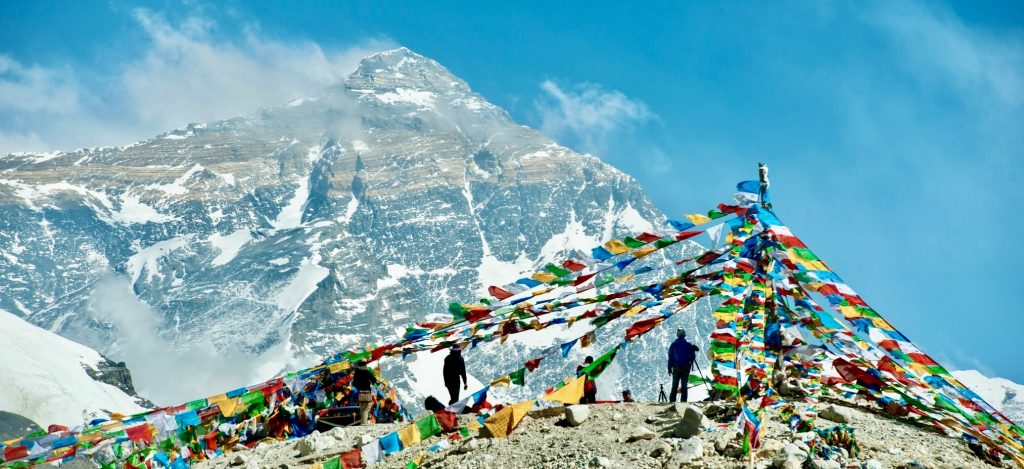
So… Why Do Really Go?
There is a specific moment on the trail usually somewhere between the monasteries of Tengboche and the high-altitude desert of Dingboche’s where the “noise” of modern life simply evaporates. In 2026, a world more connected than ever, that silence is the ultimate luxury. This is the essence of the Everest Base Camp trek.
No pings. No traffic. No endless scrolling. Just the rhythmic “thwack” of your trekking poles, the distant chime of yak bells, and the visible puff of your own breath. People think they come here to see the highest mountain on Earth, but they stay for the perspective. It’s a slow-motion reset of the human spirit.
This isn’t just a trek. It’s a slow reset.
Where You’re Actually Going: The Geography of The Giants
Located within the Sagarmatha National Park (a UNESCO World Heritage site), Everest Base Camp sits at an altitude of 5,364m (17,598 ft.).
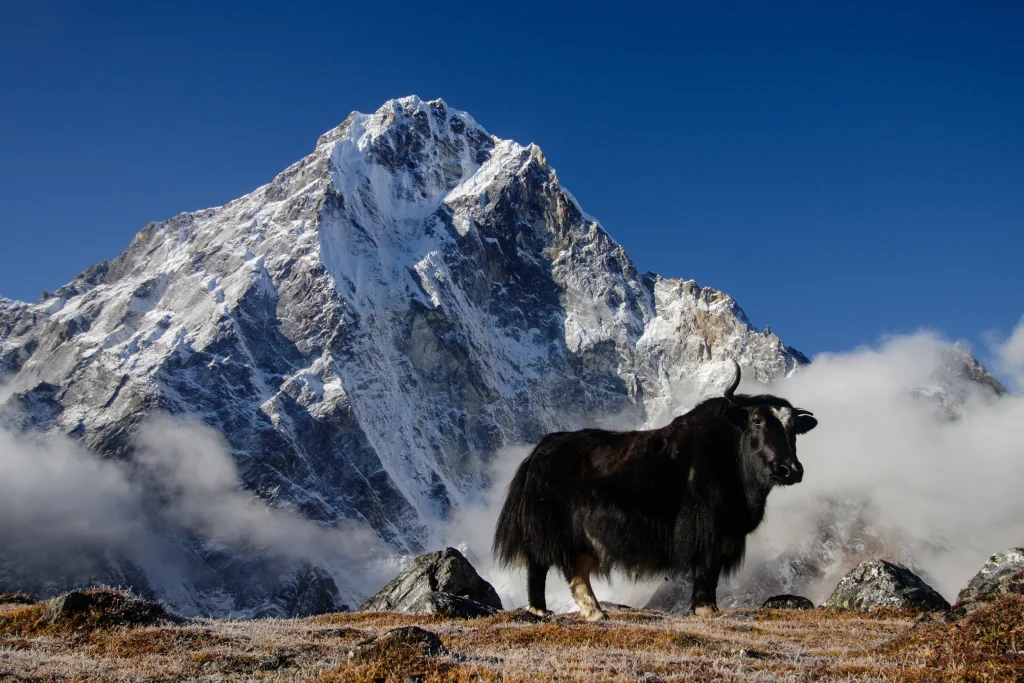
The Everest Base Camp trek is not just a journey; it’s an adventure that offers breathtaking views and a chance to reconnect with nature.
The Gateway: Lukla
The journey officially begins at Tenzing-Hillary Airport in Lukla. In 2026, while flight technology has improved, the landing remains one of the most exhilarating experiences in the world. You fly between emerald green hills before touching down on a short, uphill runway carved into the side of a mountain, setting the stage for your Everest Base Camp trek.
The Khumbu Region
From Lukla, you enter the Khumbu Valley. This is the ancestral home of the Sherpa people. It is a landscape of extremes: from lush rhododendron forests and roaring glacial rivers (like the Dudh Koshi) to the stark, lunar-like moraines of the high Himalayas.
The Journey: A Day-by-Day Map
Forget a rigid itinerary for a moment. Let’s talk about what the trek feels like as you progress.
Phase 1: The Honeymoon (Days 1–3)
- The Route: Lukla – Phakding – Namche Bazaar.
- The Vibe: You feel strong. The air is still thick with oxygen. You’ll cross high suspension bridges draped in prayer flags that sway over turquoise waters.
- The Highlight: Arriving in Namche Bazaar. Built into a natural amphitheater, this is the unofficial capital of the Khumbu. In 2026, you can still find a world-class espresso and a warm brownie here at 3,440m.
Phase 2: The Shift (Days 4–6)
- The Route: Namche (Acclimatization) – Tengboche – Dingboche.
- The Vibe: This is where the “adventure” becomes a “trek.” The trees begin to disappear, replaced by scrub brush and hardy shrubs. Conversations get shorter as your lungs work harder.
- The Highlight: The Tengboche Monastery. Hearing the deep, resonant chanting of monks against the backdrop of Ama Dablam is a spiritual anchor for many trekkers.
Phase 3: The Thin Air (Days 7–9)
- The Route: Dingboche – Lobuche – Gorak Shep.
- The Vibe: This is the psychological crux. Every step feels like you’re lifting a lead weight. The landscape is raw, gray, and magnificent. You are now higher than almost any point in Europe or the contiguous US.
- The Highlight: The Memorial Cairn at Thukla Pass. Seeing the monuments dedicated to fallen climbers is a sobering reminder of the mountain’s power.
Phase 4: The Summit of the Soul (Days 10–12)
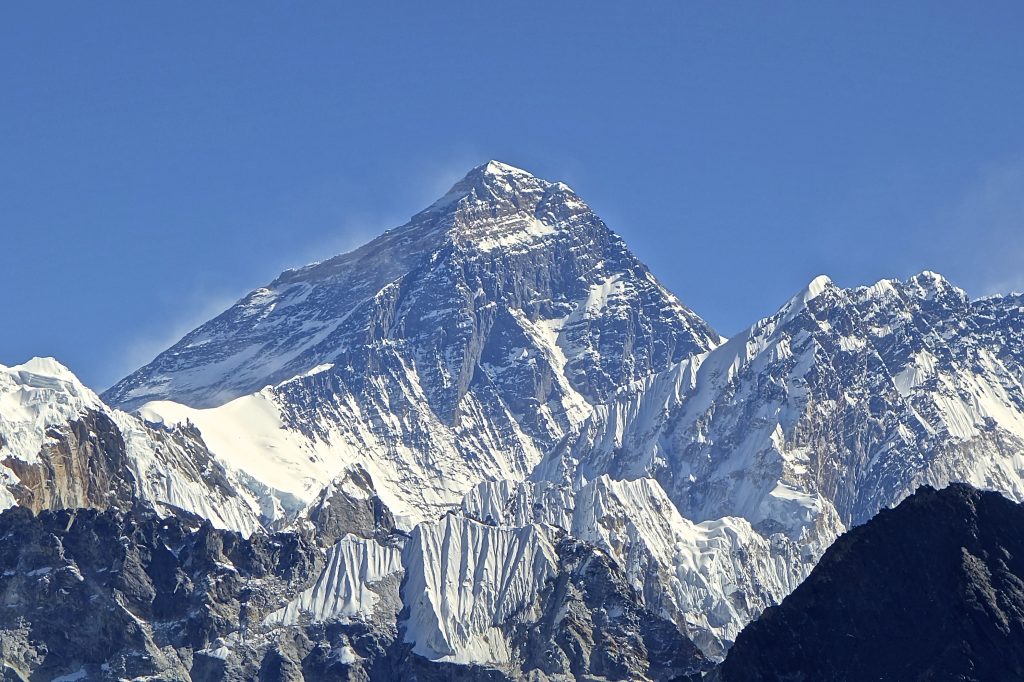
The Real View: The sunrise from Kala Patthar (5,545m). This is where you see the Khumbu Icefall and Everest’s black pyramid glowing in the first light.
The Route: Base Camp – Kala Patthar – Descent.
The Vibe: Pure adrenaline mixed with exhaustion. Reaching the rock marked “Everest Base Camp” isn’t about the view (you actually can’t see the summit of Everest from Base Camp itself!). It’s about the realization: I am standing at the foot of the world.
What people don’t tell you (The “Teahouse Truth”)
While the photos are beautiful, the daily reality involves a few logistical quirks that catch people off guard.
1. The Cost of Connection
In 2026, Star link and local providers have brought Wi-Fi to the mountains, but it isn’t free. Expect to pay anywhere from $5 to $10 USD for a data card.
- Pro Tip: Treat the trek as a digital detox. Check in with family once a day, then put the phone away.
2. The Power Tax
Charging your phone, camera, or power bank costs money at teahouses ($3–$8 per charge).
- Pro Tip: Bring a high-capacity solar power bank. Attach it to the back of your pack during the day.
3. The “Khumbu Cough”
The air is incredibly dry and cold. This can lead to a persistent, dry cough.
- Pro Tip: Wear a “buff” or neck gaiter over your mouth to warm and humidify the air you breathe.
4. Hydration is Non-Negotiable
You need to drink 4–5 liters of water a day to help your blood carry oxygen.
- Pro Tip: Carry electrolyte powder. Plain water gets boring after day four.
When Should You Go?(2026 Seasonal Guide)
| Season | Months | Pros | Cons |
| Spring | March – May | Rhododendrons in bloom; warmer temps; see Everest climbers in BC. | Can be crowded; afternoon clouds common. |
| Autumn | Sept – Nov | Crystal clear skies; most stable weather; crisp views. | Colder nights; very busy trails. |
| Winter | Dec – Feb | Empty trails; cheapest prices; stunning clarity. | Extreme cold ($-20^{\circ}C$); many teahouses closed. |
| Monsoon | June – Aug | Lush and green; no crowds. | Leeches; rain; flight cancellations; no views. |
Your 2026 Packing Strategy: Essentials Only
Forget overpacking here’s what actually matters:
• A warm down jacket (lifesaver, not optional)
• Good trekking boots (your knees will thank you)
• Lip balm & sunscreen (the sun hits differently here)
• Reusable water bottle
Small detail, big difference: Wet wipes.
You’ll understand why.
The Hard Truth About Difficulty
Most brochures call this “Moderate.” Let’s be real: it is a Physical and Mental Challenge.
You don’t need to be an Olympic athlete, but you do need stamina. The real challenge is Altitude Sickness (AMS). It doesn’t care how many marathons you’ve run.
The Golden Rule: Bistari, bistari (Slowly, slowly). If you rush, the mountain wins.
Headaches: Common, but must be monitored.
Loss of Appetite: Your body focuses on breathing rather than digesting.
Weight is your enemy. Most porters have a limit of 15kg per trekker.
- The “Big Three”:
- Down Jacket: Rated for $-15^{\circ}C$. It’s your evening uniform.
- Boots: Gore-Tex, mid-to-high ankle support, and broken in months before you arrive.
- Sleeping Bag: Even though teahouses provide blankets, a -20 rated bag is your cocoon of safety.
- The Unsung Heroes:
- Wet Wipes: Showers are rare and expensive. This is your “mountain shower.”
- Lip Balm/Sunscreen: The UV index at 5,000m is brutal.
- Oximeter: A small device to check your blood oxygen levels (your guide will have one, but having your own is great for peace of mind).
Moments You Won’t Forget
Moments That Will Stay With You Forever
The Silence of the Moraine: Walking past the Khumbu Glacier, hearing the ice “crack” and shift—a living, breathing river of ice.
The Stars: At 4,000m, with no light pollution, the Milky Way looks like a thick smear of white paint across the sky.
The Communal Stove: Sitting around the yak-dung-fired stove in a teahouse, sharing stories with trekkers from Brazil, Japan, and France.
Why Trek with Shangrila Voyages?
In 2026, there are a thousand ways to book a trek. But a “successful” trek isn’t just about reaching the rock at Base Camp; it’s about coming back healthy, inspired, and deeply connected to the culture.
Ethical Trekking: We ensure our porters are paid fairly, equipped properly, and treated as the heroes they are.
Sherpa-Led Expertise: Our guides aren’t just navigators; they are storytellers and safety experts who monitor your health every hour.
Flexible Pacing: We don’t believe in “forced marches.” If you need an extra day to acclimatize, we adjust.
Are You Ready to Rewrite Your Story?
The final section is designed to bridge the gap between “dreaming” and “doing”. Its the closing argument for the soul-the part of the guide that transforms a traveler into a trekker.
The Choice:Why 2026 is Your Year
There is a common trap in the world of adventure:the “Someday” Syndrome.We tell ourselves we will trek the Himalayas when we are fitter,when the bank account is fuller,or when work finally slows down. But the mountains dont wait for your schedule to clear,and time has a way of thimmimh out just like the mountain air.
By choosing to trek in 2026,you are making a conscious decision to reclaim your narrative.The world has spent the last few years moving faster and getting louder.To stand at the base of the highest peak on Earrth is to choose the opposite-to move slowly and exist in the quit.
The Shangrila Difference:Your Safety,Our Legacy
At Shangrila Voyages, we understand that this is likely a once-in-a-lifetime pilgrimage for you.We just dont provide a guide; we provide a bridge into Himalayan heart.
- Heritage: Our connections to the local communities mean you arent just a tourist passing through; you are a guest in a sacred landscape.
- Safety as Standard: We carry the oxygen,the oximeters,and the medical protocols so that you carry the memories.
- The Human Connection: You will start the trek with a guide and end it with a brother or sister.
If you’ve read this far, you aren’t just “browsing.” You’re looking for that reset. You’re looking for the moment where the wind drowns out the noise of the world.
2026 is the year. The mountains are waiting, and the path is clear.






What happend i dont know
Can you please clearly mention?
wish you best and best
A beautifully detailed and immersive guide to the Everest Base Camp trek—this captures not just the route, but the emotion, discipline, and transformation that comes with walking through the Himalayas. The breakdown of each phase, from Lukla to Kala Patthar, really helps future trekkers understand both the challenge and the reward of this life-changing journey.
For travelers preparing for high-altitude adventures like this, it’s also important to consider overall well-being and recovery support during demanding life transitions. In case of stress, burnout, or health challenges, accessing professional addiction treatment in Islamabad can provide structured care and rehabilitation support, helping individuals regain balance and strength before taking on physically and mentally demanding journeys like this.
Thankyou very much.
Enjoy every single day
This filled in a gap in my understanding that I had not even noticed was there, and a stop at domainiasabdubai did the same, the kind of post that gives you more than you expected when you first clicked through from somewhere else, a real find for anyone curious about the area covered here.
Thank you for being clear and direct, that simple approach saves so much frustration on the reader’s end, and a stop at jamkeg only made me more sure of it, the rest of the content seems to follow the same pattern which is a great sign of consistent editorial care behind the scenes.
Wish you happiness